
A World of Fragments
Station ElevenThe novel’s shifting chronology makes the past emerge as scattered records, memories, and objects that different survivors interpret in different ways.
increasing Bearing strength in each event
 decreasing
Bearing strength in each eventdecreasingA Broken Timeline
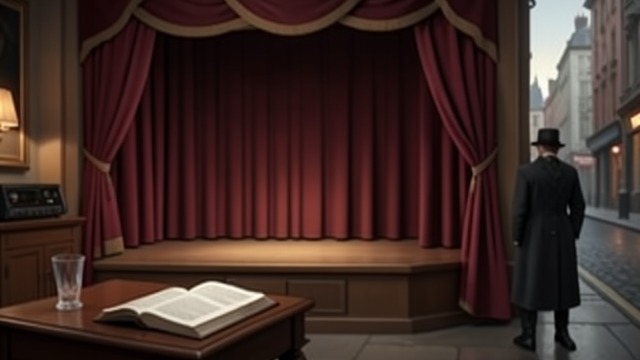
A Broken Timeline
Events arrive out of order
The narrative moves between Arthur’s last night, Miranda’s earlier life, and the Symphony decades after the Collapse. Each time period changes the meaning of details introduced elsewhere.
Connection through recurrence
A theatre, a comic, a paperweight, and a phrase reappear across years. The structure asks readers to recognize relationships as survivors do: gradually and incompletely.
Memories with Missing Pieces
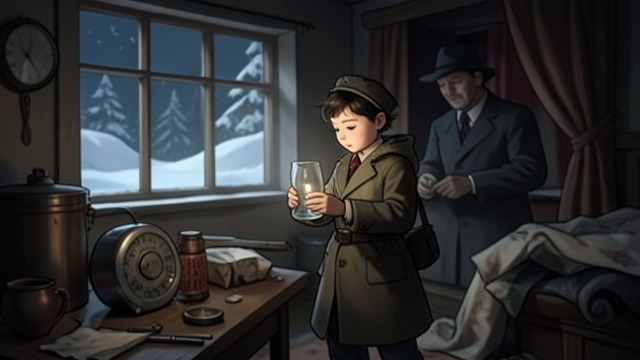
Memories with Missing Pieces
A child’s partial recollection
Kirsten remembers Arthur’s death, the stage snow, and the kindness of the man who spoke to her. She cannot remember her parents clearly or the first year after Toronto.
The limit of testimony
Her account is truthful without being complete. The novel treats memory as a personal record shaped by shock, age, and the need not to revisit certain experiences.
Arthur’s Letters
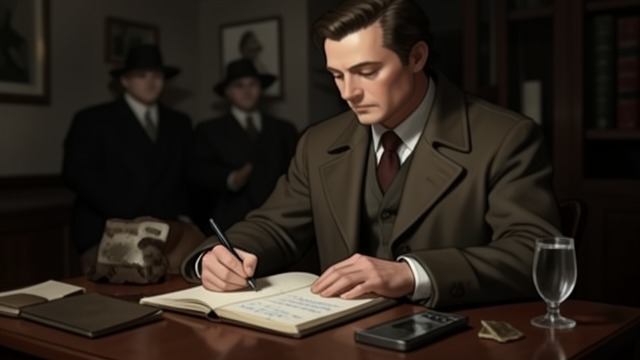
Arthur’s Letters
A life recorded privately
Arthur writes to Victoria about leaving the island, trying to act, and building relationships. His letters preserve thoughts he did not always express directly to the people involved.
The record becomes public
When the letters are published, private reflection becomes evidence others can interpret. Their release shows that archives preserve a person while also exposing them.
Objects Become Evidence

Objects Become Evidence
Preservation without full context
Clark collects phones, passports, newspapers, and everyday items. Each object points toward a former world but cannot convey the whole experience of living in it.
History made local
A newspaper from New Petoskey links the airport to the Travelling Symphony. Material evidence lets distant communities recognize one another across a landscape with few communication systems.
A Wider Pattern
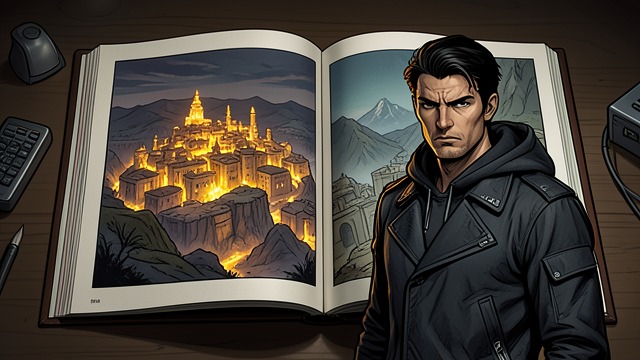
A Wider Pattern
Separate lives intersect
Clark recognizes his own past inside Miranda’s comic, while Kirsten sees an illuminated settlement beyond the airport. These discoveries connect private memory to a future beyond the known community.
No single account is complete
The novel closes with multiple lives still in motion: Jeevan’s family, the Symphony’s travels, and the airport’s new horizon. Meaning comes from the pattern among fragments rather than a restored, complete past.
From the opening night in Toronto
Kirsten’s adulthood, fifteen years after the Collapse
From Arthur’s youth through his later marriages
Year Fifteen at Severn City Airport
Near the ending, after the Symphony’s visit
